Land Acquisition

EACOP required land access for two main purposes:

1. Permanent facilities for the construction and operation of the pipeline,

2. Priority Areas related to land that was required for construction purposes

There were also both permanent and temporary access roads to the various facilities. The land acquisition process complied with National legislative requirements and the relevant International Financing Standards (IFS) captured in the Equator Principles (EP) IV and the Performance Standards (PS) of the International Finance Corporation (IFC).

Under the Host Government Agreements, it was set out that whilst EACOP was responsible for the execution of the land acquisition process, including all administrative costs and payment of compensation, the land would be owned by the Host Governments and leased back to EACOP. These leases were for 66 years for the permanent facilities and 5 years for the Priority Areas.

The overall pipeline route was designed to minimize environmental and social impacts, but some physical displacement (loss of shelter) and economic displacement (full or partial loss of livelihoods) for communities was unavoidable. Individuals and households were affected to varying degrees by these impacts.

Summary statistics were tabulated below (PAPs = Project Affected Persons, broadly corresponding to households but also extending to institutions, community property, etc).

A Resettlement Policy Framework (Tanzania) and ten Resettlement Action Plans (RAPs) were developed for the Project – one RAP for the entire 296km Uganda section, and 9 RAPs for the 1147km Tanzanian section comprising one RAP for the Priority Areas in Tanzania and eight RAPs for each of the Regions with permanent facilities.

These key documents described the land required for the Project, the land acquisition process undertaken, the communities and households affected, the entitlements and eligibility of people for different types of compensation, vulnerable people affected by land acquisition, in-kind compensation options including replacement housing, transitional support, and livelihood restoration programmes, as well as the implementation and monitoring plans.

In summary the RAPs set out EACOP Project commitments which included:

Current Status

The initial land delineation and asset surveys were undertaken, valuation reports were developed, and then approved by the appropriate Authorities in the period 2018–2020.

Due to slippage in the timing of the final investment decision, there was a waiting period between this survey phase – known as RAP planning – and the actual land acquisition phase – known as RAP Implementation.

During this waiting period, EACOP maintained a dialogue with PAPs, informing them to continue farming their land and taking care of their trees and structures as usual (link to document showing this communication). Moreover, since PAPs had not had their compensation entitlements explained to them, had not signed their compensation agreements, or received their compensation, no PAPs were requested to leave their land.

Actual signing of compensation agreements and payment of compensation commenced

Compensation Calculation

The way cash compensation was calculated was not identical between the two countries, but it broadly consisted of the following elements, resulting in full replacement value being paid:

PAPs have access to a Grievance Mechanism

Payment of Compensation

EACOP assisted PAPs to open bank accounts with their spouses and provided them with financial literacy training. These accounts were operated free of charge. Compensation was paid to those households that had signed their compensation agreements. Given the time elapsed since the initial valuation, compensation values were uplifted to reflect full replacement value at the time when compensation was paid.

After payment of compensation and closer to the time when land access was needed, EACOP issued households with notices to vacate. During this period, EACOP supported the households to harvest crops, salvage any materials, and vacate the land.

Once households left their land, EACOP started providing eligible households with additional in-kind compensation, including transitional support (food baskets) and livelihood restoration programmes.

Replacement House Construction

Physically displaced PAPs were encouraged to choose replacement houses rather than cash compensation. These choices were made in both Uganda and Tanzania starting in 2021 and the first half of 2022. Almost 90% of eligible PAPs elected for replacement houses.

EACOP engaged with affected households during the design of replacement houses by national architects. The size of the replacement houses was equal to or larger than the existing structures; the houses were built to a higher standard compared to existing structures and aligned with national guidelines and requirements. In addition to houses, external kitchens and ventilated improved pit latrines were also built. Houses were equipped with a solar panel and rainwater harvesting & storage systems.

Housing designs and options were fully disclosed to enable affected households to make an informed choice between replacement houses or cash compensation. Households were involved in the design of the layout of the replacement housing and ancillary structures on their plots prior to the start of construction.


Construction of replacement houses was ongoing and was expected to be completed prior to households receiving notice to vacate their land. The general objective, consistent with best practice, was that PAPs moved directly to their new permanent homes; temporary housing was used only in very specific circumstances.

Livelihood Restoration Programmes

Livelihood restoration programmes were accessible to eligible Project Affected Persons and their households. The types of Livelihood Programmes were described in the RAPs and adapted to local conditions and needs. There was a strong focus on support for agriculture, crop diversification, livestock management, and enterprise development.


As an example, at the coating plant site in Tanzania, the first harvest for affected households was significantly increased following the training, support, and inputs provided. Livelihood restoration programmes were expected to run for 2–3 years until households’ livelihoods were restored.

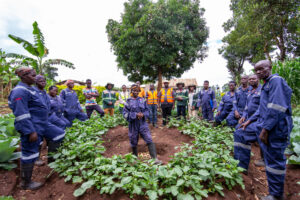
Agricultural Improvement Program

This Program aims to enhance the livelihoods of Project Affected Persons (PAPs) by providing practical, hands-on training in modern farming techniques and designed to increase agricultural productivity and resilience among affected households.

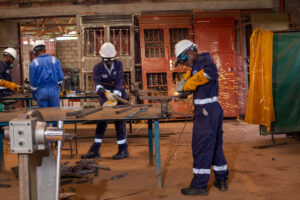
Enterprise Development and Vocational Skills Training

These programs aim to boost the capacity of affected households to earn income and improve resilience through self-employment or paid employment. Over 1,700 youths have been trained in disciplines.

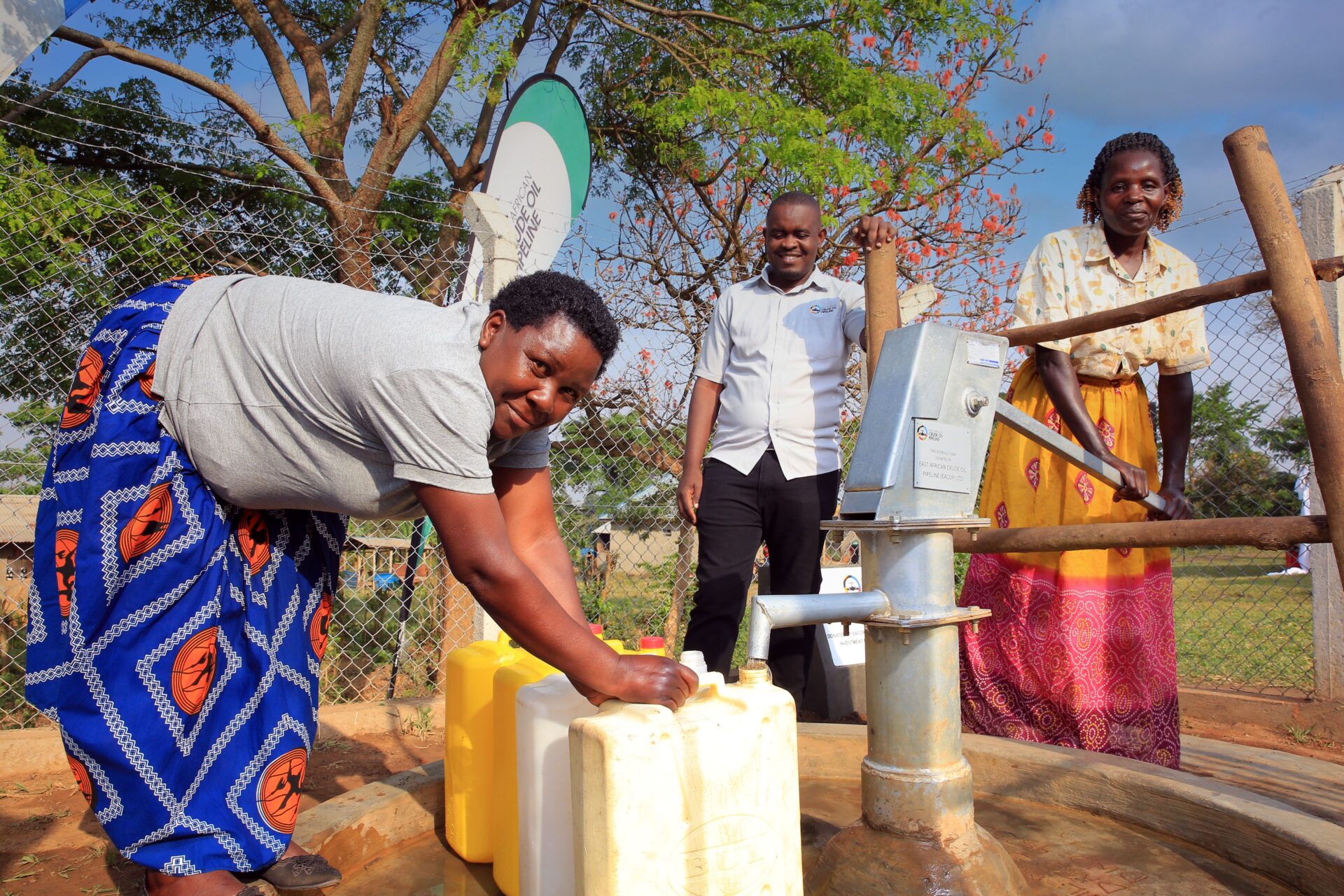
Water Provision Program

EACOP has undertaken initiatives to improve access to safe and clean water for communities affected by the pipeline project. This includes the construction of boreholes to provide reliable sources of potable water, thereby enhancing community health and well-being.

Access to Finance

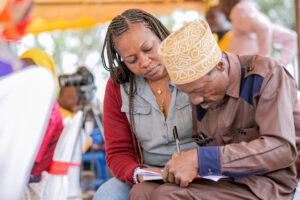
EACOP provides financial literacy and money management training to Project Affected Persons as part of its livelihood restoration programs. These trainings are designed to help PAPs effectively manage compensation funds and improve their economic well-being.

Kabajjo Memorial Junior School: EACOP's In-Kind Compensation Initiative

Kabajjo Memorial Junior School, situated in Sembabule District, Uganda, was affected by the East African Crude Oil Pipeline (EACOP) project’s Right of Way (ROW). In line with its Environmental and Social Impact Assessment (ESIA) commitments, EACOP collaborated with the school’s leadership to provide in-kind compensation. The school opted for the construction of a new, modern classroom block to replace the affected structure.

The new facilities were completed and handed over by November 2024, offering an enhanced learning environment for students. This initiative underscores EACOP’s commitment to responsible project implementation and positive community engagement. The improved infrastructure not only addressed the project’s impact but also contributed to the school’s academic achievements and bolstered the community’s confidence in the educational system.